A Gilded Cage in Leningrad
Mikhail Baryshnikov was born in 1948 in Riga, Latvia, then part of the Soviet Union. His childhood was not easy. His mother died by suicide when he was twelve, and his relationship with his father was cold and distant. Dance became his world — perhaps his only reliable one.
He trained at the Vaganova Academy in Leningrad, the most prestigious ballet school in the Soviet Union. His teachers recognized almost immediately that they had someone extraordinary. He was compact where most male ballet stars were tall, but what he lacked in conventional physique he more than compensated for with an almost supernatural ability to leap, suspend himself in the air, and land with perfect control. By his early twenties, dancing with the legendary Kirov Ballet, Baryshnikov was not just celebrated — he was genuinely worshipped by Soviet audiences.
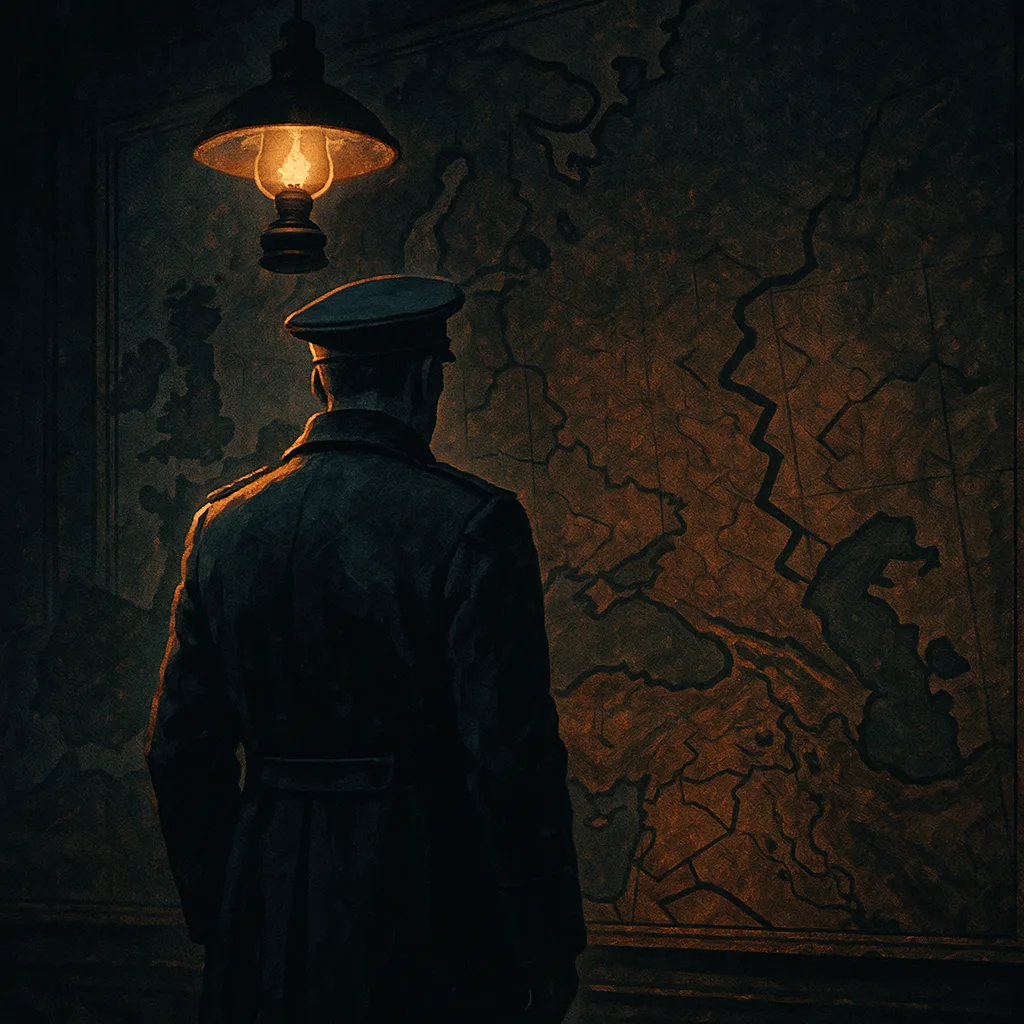
But fame inside the Soviet Union came at a price. Artists were state property. The KGB monitored performers who traveled abroad. Every tour was carefully managed, every contact with foreigners observed. For a man of Baryshnikov's restless artistic ambition, the restrictions were suffocating. He wanted to work with choreographers the Soviet system would never permit. He wanted creative freedom that socialism, in its cultural form, actively denied.

Toronto, a Dark Parking Lot, and a Split-Second Decision
In June 1974, the Kirov Ballet toured Canada. On the evening of June 29, after a performance in Toronto, Baryshnikov made his move. The plan had been carefully arranged in advance with the help of Canadian friends, including Christina Berlin, a well-connected arts figure who had befriended him. After the final curtain, while Soviet minders were occupied, Baryshnikov slipped away from his colleagues and ran toward a waiting car in the parking lot outside the venue.
It was not a graceful, choreographed exit. It was a sprint in the dark, driven by fear and adrenaline. He was twenty-six years old.
The Soviet government demanded his return, as they routinely did when artists defected. Canada refused. Baryshnikov was granted asylum, and the Soviet Union — humiliated but not surprised, as defections by artists had become a recurring embarrassment — eventually had to accept the loss. Rudolf Nureyev had defected in 1961. Natalia Makarova had followed in 1970. Now Baryshnikov completed what some called ballet's great defection trilogy.

What Freedom Actually Looked Like
In the West, Baryshnikov did not simply continue what he had been doing in Leningrad. He reinvented himself, which was precisely the point. He joined the American Ballet Theatre and later became its artistic director. He collaborated with George Balanchine at the New York City Ballet — a partnership that would have been unthinkable under Soviet cultural doctrine. He worked with modern choreographers, pushed himself into new physical vocabularies, and refused to be frozen as a classical icon.
He also crossed into popular culture in ways Soviet stardom never allowed. American and international audiences saw him in the 1977 film The Turning Point, for which he received an Academy Award nomination. Later generations would know him from Sex and the City, where he played Carrie Bradshaw's Russian lover — a role laced with a particular irony, given his biography.

Why This Moment Still Matters
Baryshnikov's defection was not simply a personal escape story. It was a vivid demonstration of one of the Soviet system's deepest contradictions. The USSR invested enormous resources in producing world-class artists — ballet, music, literature — as proof of socialist cultural superiority. Yet the system's political controls made genuine artistic life nearly impossible for the most gifted and ambitious. The artists it created kept leaving.
Every defection was both a personal liberation and a political wound. Each one told the world that even those the Soviet Union celebrated most could not bear to stay.
Baryshnikov leaped across that divide on a June night in Toronto with nothing but a waiting car and the terrifying clarity that there was no going back. What followed was one of the most remarkable artistic careers of the twentieth century — built entirely on the other side of that single, irreversible choice.