A Match That Could Not Be Neutral
Argentina and England did not simply meet in Mexico City on June 22, 1986. They met carrying four years of unfinished war.
In 1982, the two countries had fought over the Falkland Islands — a small British territory in the South Atlantic that Argentina calls the Malvinas. Around 900 people died in ten weeks of fighting. Argentina lost. The wounds were fresh, the anger real, and football — as it often does — became the arena where something deeper was being settled.
Diego Maradona said it himself, years later. He described scoring against England as "winning a little bit of the Malvinas." This was not just a quarter-final. For millions of Argentinians watching, it felt like a second chance at history.

The First Goal: A Fist, a Silence, and a Smirk
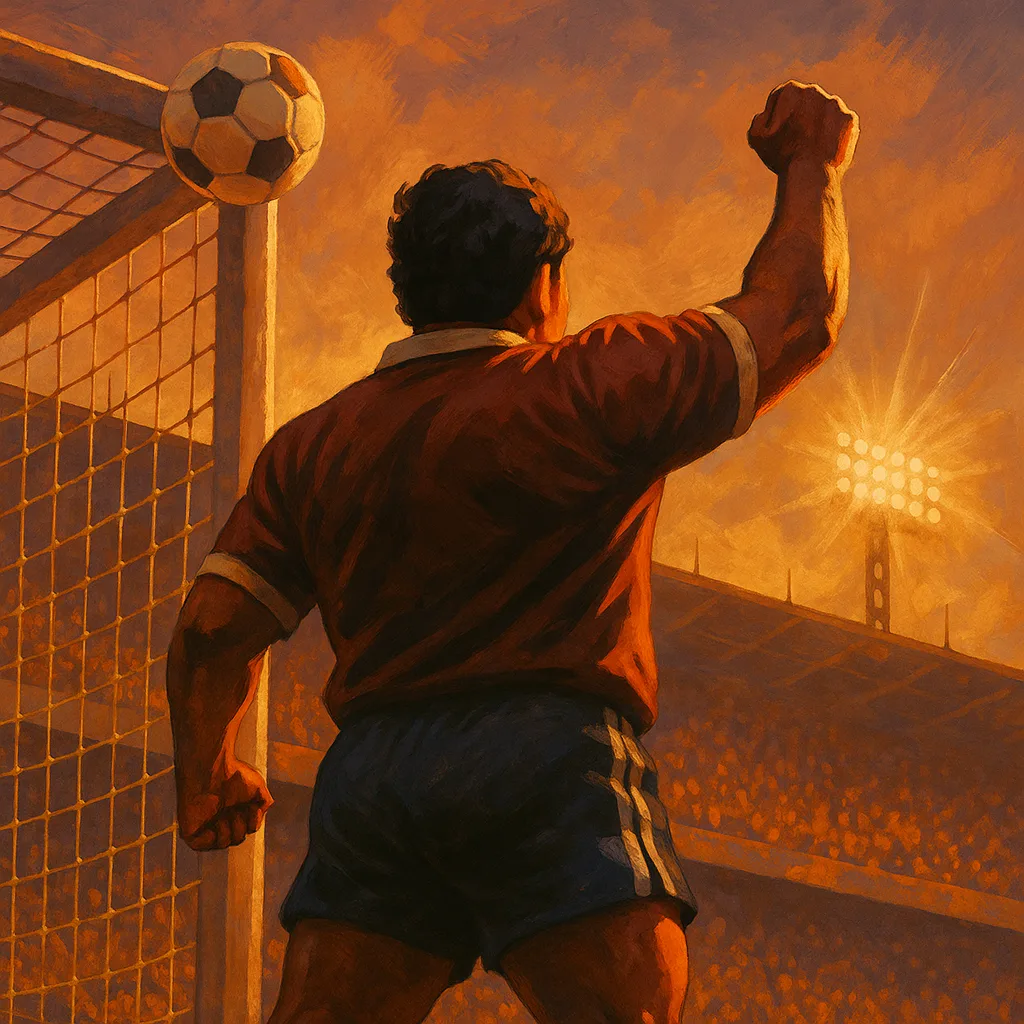
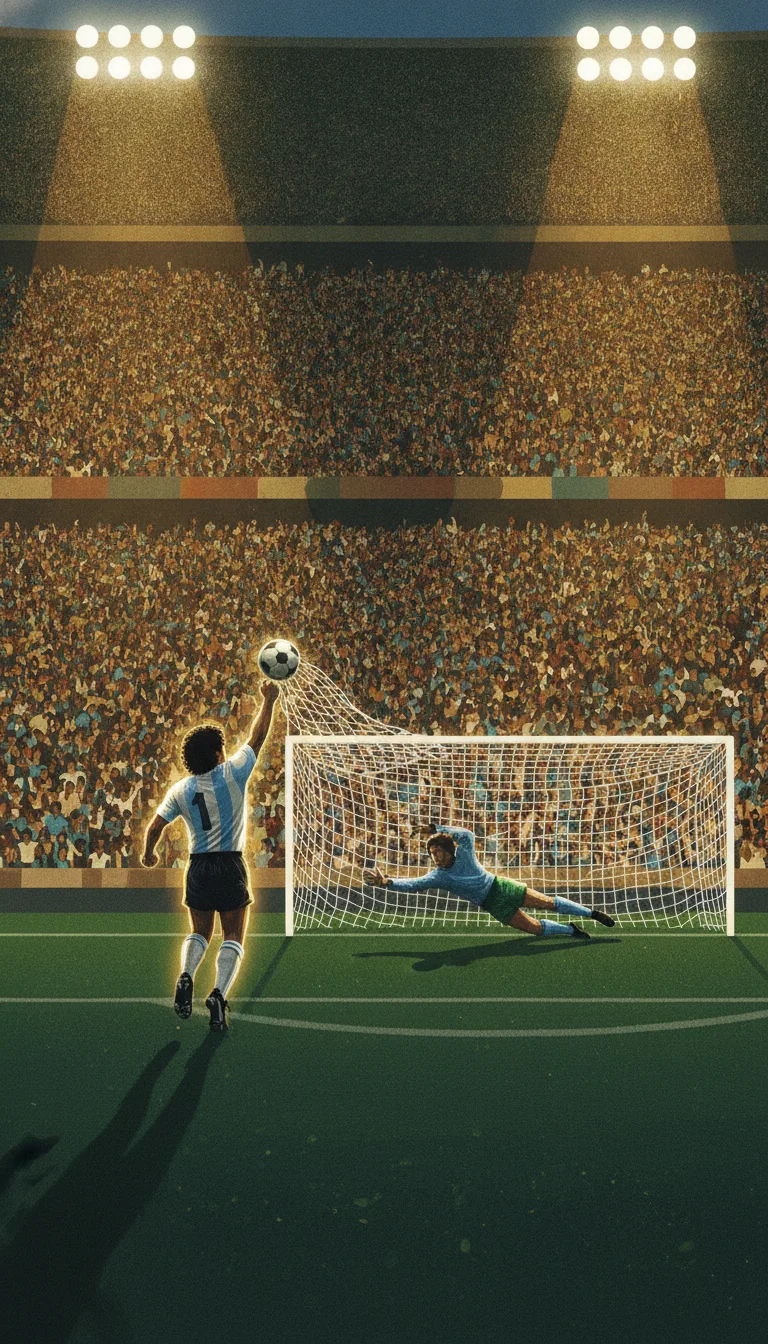
Fifty-one minutes into the match, a loose ball dropped inside the England penalty area. Maradona jumped with goalkeeper Peter Shilton — and punched it into the net with his left hand. Shilton was taller. He should have reached it. But Maradona was faster, cleverer, and in that moment, dishonest.
The Tunisian referee, Ali Bin Nasser, did not see the handball. The linesman did not flag. The goal stood. England's players surrounded the referee in fury. Maradona jogged away, glancing back with an expression that flickered between guilt and delight.
In the post-match press conference, he described the goal as scored "a little with the head of Maradona, a little with the hand of God." The phrase was so perfectly constructed — so disarming in its audacity — that it became one of the most quoted lines in sporting history. He was not apologising. He was mythologising.

Four Minutes That Changed Everything
What happened next made the cheating almost irrelevant — not because it excused it, but because it overwhelmed it entirely.
From just inside his own half, Maradona received the ball and turned. What followed lasted eleven seconds and covered roughly sixty metres. He accelerated past Peter Beardsley, then navigated around Peter Reid. Two more English defenders — Terry Fenwick and Terry Butcher — each tried to stop him and failed. Finally, goalkeeper Shilton came off his line. Maradona went around him too, and rolled the ball into the empty net.
He had touched it six times. He had beaten six men. He had barely looked up.
His teammates chased after him in disbelief. Maradona himself looked almost confused — as if even he couldn't fully explain what he had just done.

How the World Decided It Was the Greatest Goal Ever Scored
In 2002, FIFA asked football fans around the world to vote for the greatest goal in World Cup history. The 1986 goal won by a wide margin. It is still officially recognised as the Goal of the Century.
Sports scientists and football analysts have studied it extensively since then. What strikes them most is not just the skill — it is the decision-making. At full sprint, under pressure, Maradona made the correct choice at every single moment. He didn't slow down to think. He processed everything in real time, faster than any defender could react.
England did score once, through Gary Lineker, but Argentina won 2–1 and went on to win the entire tournament. Maradona scored five goals and assisted five more across the competition. He carried a national team of relatively modest talent to the World Cup title — almost entirely by himself.
What Those Eight Minutes Left Behind
The two goals sit together in history like a paradox. One was a deception. One was a masterpiece. The same man, the same match, four minutes apart.
Maradona never fully apologised for the handball. He acknowledged it late in life, but with a kind of pride that never quite surrendered. And yet England fans — many of whom were furious for decades — have gradually separated the two moments. The goal is celebrated even by those who still resent the hand.
That says something unusual about greatness. Maradona didn't just score. He forced the world to hold two contradictory feelings at once: indignation and wonder. Very few athletes in any sport have ever managed that.
He died in November 2020. Argentina went on to win the World Cup in 2022, thirty-six years after Mexico. His picture was everywhere in the stadium. Some debts are never fully settled.